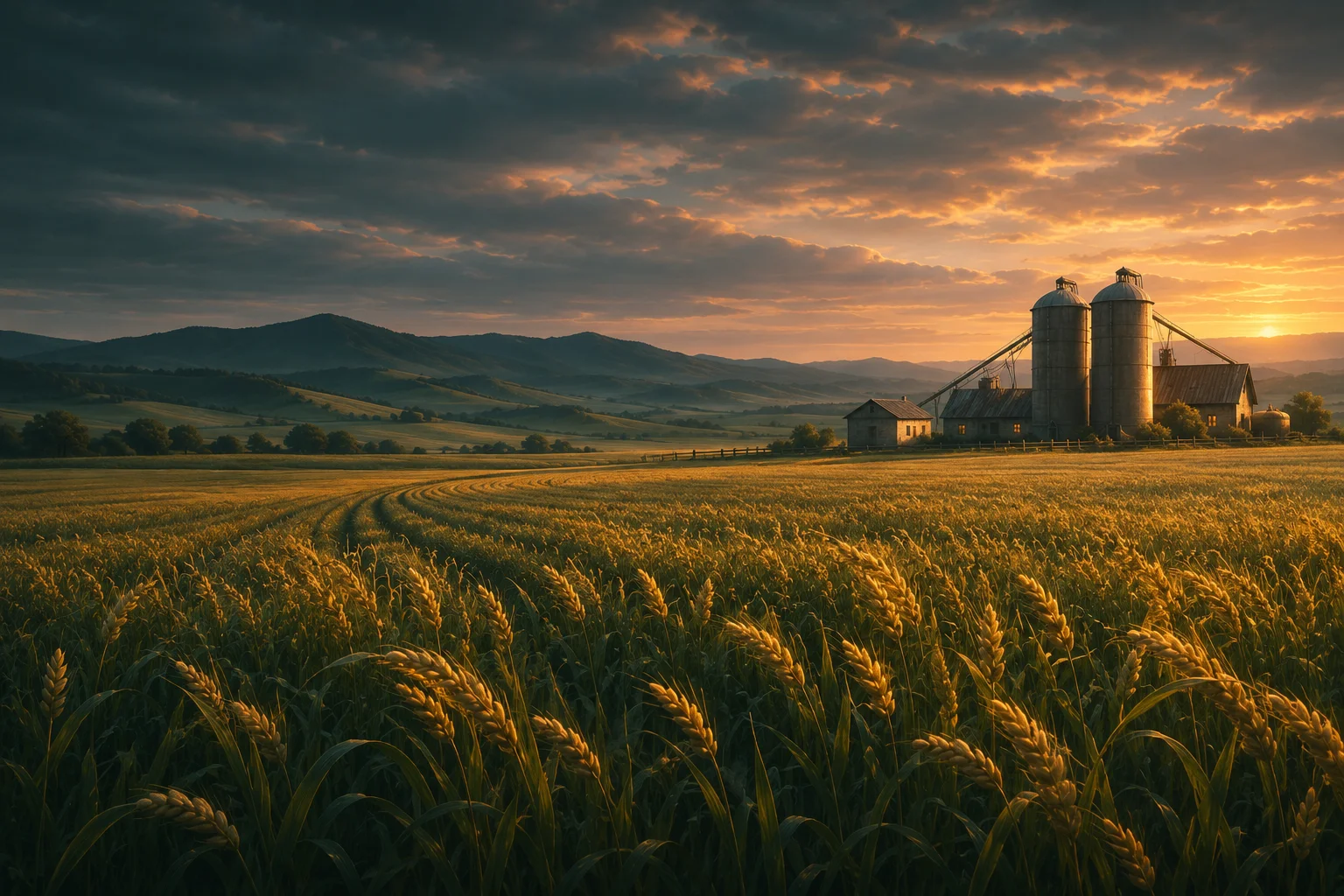
District 11's harvest and the workers denied its food
District 11's agriculture sustains people beyond its own borders, but the novels separate the act of growing food from permission to eat it. Rue describes strict supervision, work among orchard trees, and punishment for taking produce. Its agricultural role therefore cannot be understood through a picture of abundant fields alone. The important relationship is between the people doing the work and the authority controlling its output.
That control also shapes communication. Rue's four-note signal marks the end of the workday, and mockingjays carry it across the orchard. A sound developed within collective labor becomes useful when she and Katniss need to find each other in the arena. The connection gives her knowledge a history outside the competition.
The Victory Tour then brings Katniss into the district as a visible representative of the same Games that killed Rue and Thresh. She cannot make their families' grief private while cameras, officials, and Peacekeepers control the occasion. A gesture of respect becomes politically dangerous precisely because it reaches people who recognize the same losses. District 11's place in the story joins food production, disciplined labor, and solidarity across the boundaries the Capitol tries to maintain.
The Hopeful Cultivator learns from Rue's shared knowledge
The Hopeful Cultivator is this site's fan interpretation of District 11's connection with sustained community care. Rue supplies a specific starting point: her contribution to the alliance includes observation, communication, and practical knowledge. Katniss benefits from what the younger tribute knows, so the relationship cannot be described only as an older person protecting someone helpless.
An ordinary expression of this profile might involve a group sharing limited equipment. A Cultivator response asks who cannot use the existing timetable, checks the reason with that person, and arranges support or a different slot. Dividing access by whoever speaks first would miss the people a shared system is meant to serve. The agricultural metaphor concerns maintaining conditions for participation over time.
The bread gift provides a second connection. District 11 sends a resource to someone outside its own tribute pair after Katniss honors Rue. This particular act makes mutual recognition visible through food. For the profile, its practical counterpart is deciding what a community can share and who must be involved in that decision, rather than assuming one committed person can supply every need.
- Ask which participant the existing timetable excludes and why.
- Check the support someone requests before choosing it on their behalf.
- Assign responsibility for maintaining a fair arrangement after the first change.
Rue's four-note signal and the flowers around her body
Rue brings practical knowledge into her alliance with Katniss. Her four-note signal and the mockingjays that repeat it turn sound into a way to communicate across distance. The detail connects a particular District 11 character with observation and cooperation; it is more specific than describing the whole district as simply kind or connected to nature.
After Rue dies, Katniss arranges flowers around her body. The act interrupts the Games' preferred presentation of a tribute as an expendable competitor. Katniss insists that the audience see a person worth grieving. The relationship between the two girls therefore changes not only their arena choices but also the meaning carried by the broadcast.
District 11's gift of bread to Katniss after Rue's death extends that connection beyond the arena. It links a private alliance to people watching from home. Food is both a practical resource and a message, making the district's agricultural association part of a particular exchange rather than a generic symbol of nurturing. The significance comes from who sends it, when it arrives, and what Katniss has done.
Thresh at the feast and District 11 on the Victory Tour
Thresh's intervention during the feast connects him to Rue without requiring him to have shared Katniss's alliance. After hearing Clove's words about Rue, he acts against Clove and spares Katniss because of her care for Rue. The scene is a specific decision about a debt and a relationship, not evidence that he follows a general rule of helping every opponent.
Catching Fire returns Katniss and Peeta to District 11 on the Victory Tour. Their encounter with the families of Rue and Thresh turns the deaths from the previous Games into a public political situation. Gestures of respect are dangerous because Capitol officials control how the tour is supposed to be interpreted.
Together, the feast and the tour show why District 11's story cannot be reduced to peaceful farm imagery. Mutual recognition can challenge the institutions that separate districts and stage their children as enemies. The Hopeful Cultivator profile uses community care as its theme, while these scenes show the risk and specificity of that care inside Panem.
Who Lives in District 11
Agricultural laborers and their families live under strict Peacekeeper control while producing food for Panem. Rue describes orchard work, long harvest hours, and punishment for taking the crops they tend. Children contribute labor; producing food does not mean workers can freely eat it.
Catching Fire brings Katniss and Peeta to the district on the Victory Tour. They face Rue's and Thresh's families before a public gesture of solidarity is met with execution. This scene makes the district's daily vulnerability visible outside the arena.
District 11 in the Books vs the Films
After Rue's death, the first novel has District 11 send Katniss bread, turning food into a costly gesture across district boundaries. The 2012 film omits that gift and adds a cutaway showing unrest in District 11 after Katniss honors Rue. The novel reaches its residents through what Katniss receives; the film shows a public response she cannot witness from inside the arena.
Famous Characters from District 11
- Rue uses climbing, plant knowledge, and a four-note signal in her alliance with Katniss. Those skills connect orchard labor with practical cooperation rather than reducing the twelve-year-old tribute to someone awaiting rescue.
- Thresh spares Katniss at the feast after learning she helped Rue. His decision gives District 11 a second form of solidarity, expressed through a debt he chooses to recognize without joining her alliance.
- Chaff returns for the Quarter Quell as one of District 11's older victors. His friendship with Haymitch connects the district to survivors whose relationships developed before Katniss entered the Games.
If Your Result Is District 11
A District 11 result highlights the Hopeful Cultivator: you favored fair access, mutual support, and protecting conditions that let others contribute. Read Rue's signal and the bread gift as connections. Knowledge and resources become useful because someone shares them across a boundary.
Choose one shared arrangement and ask whose needs were missing when it was designed. Make one practical change with the people affected, then decide who can maintain it. This gives the profile a direction that includes responsibility rather than an obligation to help indefinitely. Compare District 10 if your strongest instinct is attending to an immediate practical need. Read District 12 if independent judgment and protecting a particular relationship usually come first. These neighboring guides distinguish sustained community fairness from responsive care or personal improvisation. The quiz explores those priorities through twelve scenarios, using its published answer map.
Compare District 10 · Explore District 12 · Try the district quiz
District 11 FAQ: Agriculture, Rue, and Hunger
- What does District 11 produce?
District 11 specializes in agriculture, particularly orchards and crops. Its role differs from District 9's grain and District 10's livestock; the books connect Rue's skills with work among trees.
- Why are people hungry in District 11 if it grows food?
The Capitol controls the harvest and punishes workers who take food. Rue explains that tending crops does not grant permission to eat them, separating production from access to its benefits.
- Are Rue and Thresh from District 11?
Yes. They are District 11's tributes in the 74th Games. Chaff and Seeder represent the district in the 75th, whose reaping is restricted to previous victors.